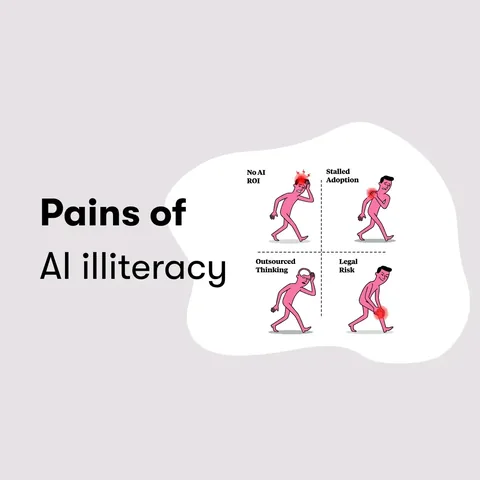
AI is built into everyday tools like Microsoft Copilot, Google Workspace, Notion, and countless others. But under the EU AI Act, not everything marketed as “AI” necessarily qualifies as an AI system.
First, What Is an AI System?
The EU AI Act defines an AI system as:
“A machine-based system designed to operate with varying levels of autonomy and that may exhibit adaptiveness after deployment, and that, for explicit or implicit objectives, infers, from the input it receives, how to generate outputs such as predictions, content, recommendations, or decisions that can influence physical or virtual environments.”
A system likely qualifies as an AI system if it processes input data to produce useful outputs such as recommendations, text, decisions, or forecasts – especially when some part of that process is automated
Is Copilot an AI System?
Yes. Based on the definition in the EU AI Act, Microsoft Copilot and similar tools fall squarely under the category of AI systems.
Why?
- They operate autonomously.
- They generate outputs like summaries, code, emails, and insights based on user input.
- They influence decisions, content, and productivity.
Even if a user prompts the system manually (e.g. writing “Draft a reply to this email”), the Copilot tool uses machine learning and natural language processing to infer intent and produce an output that guides action. That’s AI under the Act.
Why This Matters
If your organization uses tools like Copilot, the EU AI Act may impose obligations, especially if those tools are applied in high-risk contexts (e.g. hiring, compliance, health, finance).
But even outside of high-risk use cases, AI literacy obligations still apply.
According to Article 4, all deployers of AI systems must take measures “to their best extent” to ensure their staff have a sufficient level of AI literacy. That includes people using Copilot and similar tools on the company’s behalf.
Compliance Starts With Awareness
The Act doesn’t just regulate developers. If you use AI tools like Copilot in your operations, you’re a deployer—and that comes with responsibility.
You need to:
- Know which tools you’re using qualify as AI systems
- Train your team accordingly
- Understand when higher obligations apply (e.g. human oversight or transparency)
The fact that tools like Copilot are embedded in familiar platforms doesn’t change their legal status. If they function as AI systems, they need to be treated as such.
Get AI Ready—with Confidence
MinnaLearn’s Get AI Ready course is designed to help teams build the skills and understanding required under the EU AI Act—quickly, practically, and without legal jargon.
Whether your team is experimenting with Copilot or deploying more advanced tools, one thing is clear: AI literacy is no longer optional.